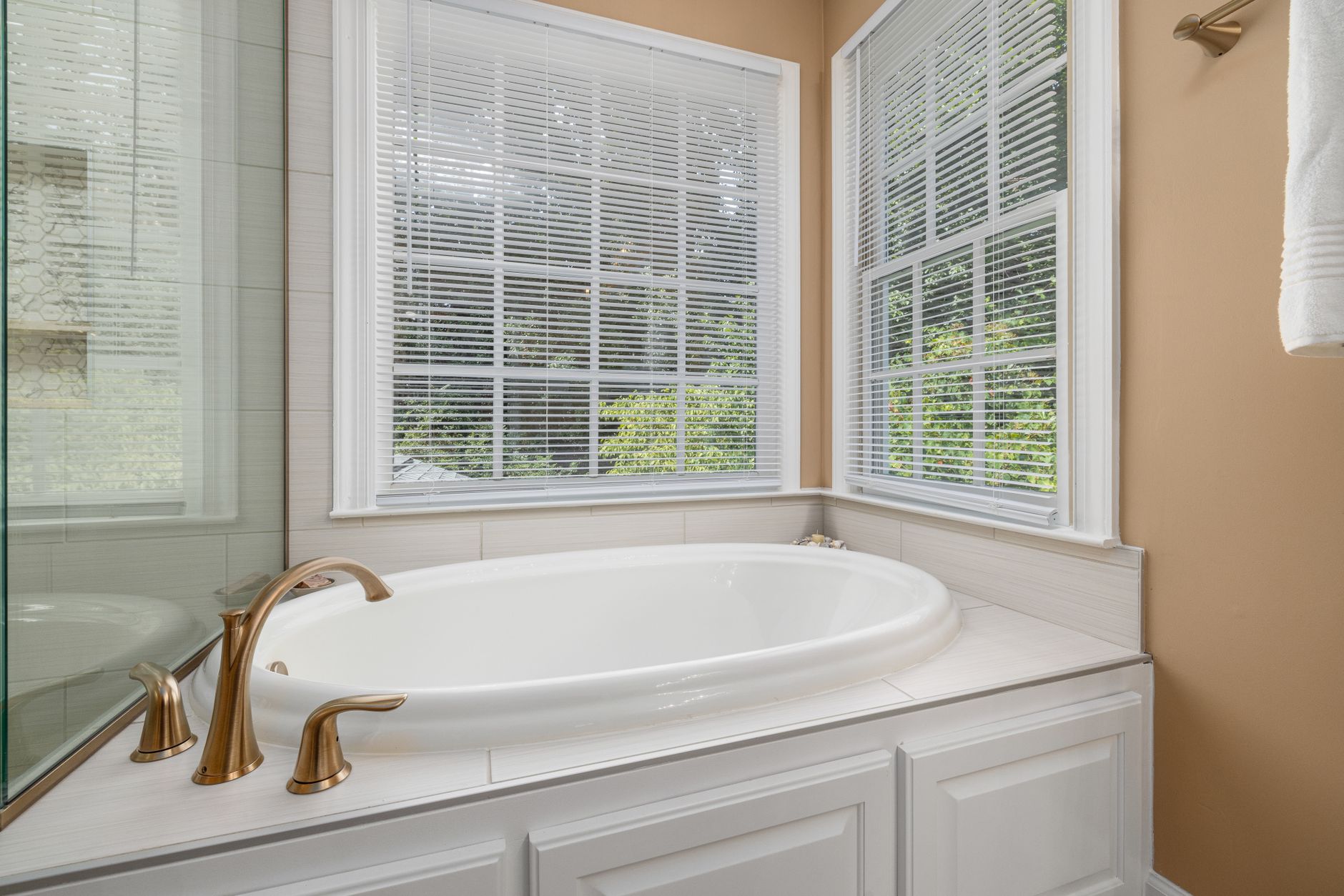
Bath Remodeling in Riverside, CA
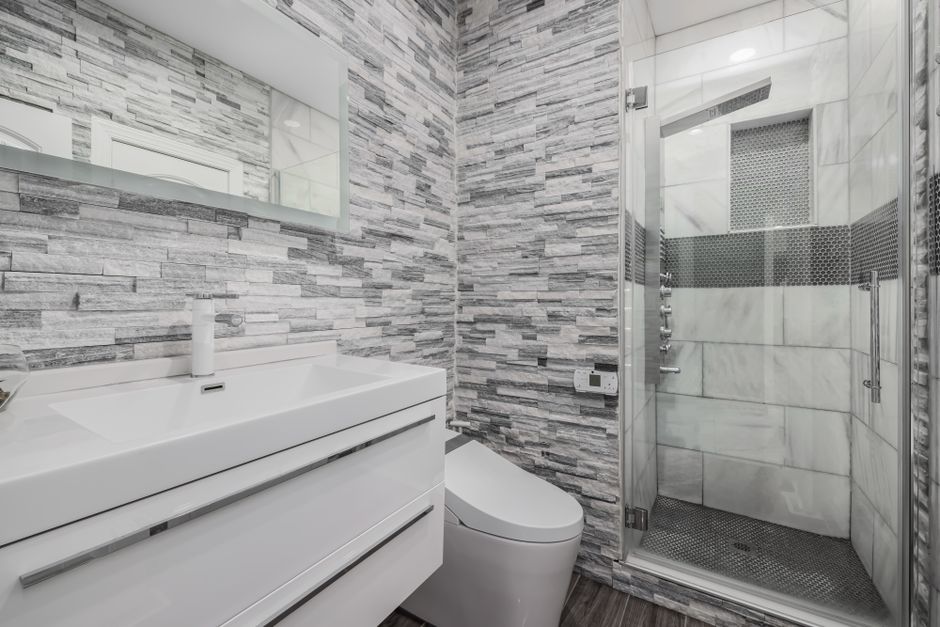
Notes on bath remodeling in Riverside, CA, covering tubs, fixtures, tile and the hard water that shapes each choice.
What We Cover
- Freestanding Tub or Alcove Tub for a Riverside Bathroom How floor framing, wall space and plumbing location decide which tub fits a Riverside bathroom.
- Hard Water and Mineral Buildup on Riverside Shower Glass Why Inland Empire water leaves a cloudy film on glass and fixtures, and how crews prevent and remove the deposits.
- Low-Flow Fixtures in a Dry Inland Empire Climate What low-flow showerheads and faucets change on the install side, and how they behave with hard Riverside water.
- Replacing or Refinishing a Bathtub in a Riverside Home How a crew decides between pulling an old bathtub and refinishing it, and what the surface and drain tell them.
- Tile Wainscot and Easy-to-Clean Surfaces for a Riverside Bath How grout width, tile size and wainscot height change how often a Riverside bathroom needs scrubbing.
- Water Heater Size and Tub Fill Time in Older Riverside Homes Why a large soaking tub can outrun an older water heater, and what crews measure before the tub is ordered.
Bath Remodeling in Riverside, CA
A bathroom in Riverside takes more punishment from water than most rooms in the house. The water that comes out of the tap in Riverside County is hard, so every surface that stays wet collects a white mineral film, and a good remodel is planned around that from the first measurement. A crew starts by looking at the tub, the valve behind the wall, and the floor under both.
Tubs, tub surrounds and what sits behind them
Most calls start with a tired bathtub. The crew checks the enamel, the drain, and the caulk line before deciding whether to refinish the tub or pull it. An alcove tub with a tile surround is the common setup in older Riverside houses, and a freestanding tub is a bigger job because the floor and the drain both change. Behind either one sits cement board, a waterproofing membrane, and thinset, and that layer matters more than the tile that shows.
Fixtures and the water they meet
Low-flow showerheads and faucets suit a dry part of the Inland Empire, but the small openings inside them fill with mineral deposits first. Crews choose fixtures with cartridges that can be pulled and cleaned, and they test flow with a bucket before the wall is closed. The water heater is part of the same conversation, since a bigger tub can outrun an older tank.
Surfaces that clean easily
Tile choice decides how often the bathroom needs scrubbing. Large porcelain tile has fewer grout lines, a tile wainscot protects the wall where splashes land, and a brushed fixture finish hides spots better than polished chrome. Houses near Fairmount Park and the Mission Inn often have older plumbing and framing, which a crew checks before the new surfaces go on.
Guides
The pages here cover refinishing and replacing a tub, hard water on glass and fixtures, freestanding and alcove tubs, low-flow fixtures, easy-to-clean tile, and matching a water heater to a larger tub. Each one describes how the work is done on a Riverside bathroom.
Latest Guides
Choosing a Bathtub Material for a Riverside Home
2026-10-06
Pick up three bathtubs of the same size and they will feel nothing alike. One rings like a bell when a knuckle taps the side, one gives a dull thud, and one flexes slightly under a hand. The material decides how the tub holds heat, how it handles a dropped bottle, how much the floor underneath has to carry, and how it looks after ten years of Inland Empire water running over it. For anyone planning a bathroom in Riverside, the material question comes before color, shape or faucet.
What are the common bathtub materials?
Most bathtubs installed in Riverside homes fall into four groups: acrylic, fiberglass, enameled steel and enameled cast iron. A fifth group, solid surface and stone resin, shows up mostly in freestanding tubs. Each has a different manufacturing process, and the process explains the behavior.
Acrylic starts as a flat sheet that is heated and drawn into a mold, then backed with fiberglass and resin for strength. Fiberglass tubs skip the acrylic sheet and use a gel coat sprayed straight into the mold. Steel tubs are stamped from a sheet and coated with a layer of glass enamel that is fired at high heat. Cast iron tubs are poured as molten metal into a mold and then enameled in the same way.
Material Weight when empty Heat retention Surface behavior Repair options Acrylic Light Good, the shell is a poor conductor Warm to the touch, scratches show but can be buffed Polish out light scratches, patch deep ones Fiberglass Light Fair Gel coat dulls and can chalk with age Recoat or refinish Enameled steel Medium Poor, loses heat fast Hard glaze that chips at the edges Chip repair, then refinish Enameled cast iron Very heavy Excellent once warm Thick glaze, tough against scrubbing Refinish, replacement is a heavy job The table is a starting map, and a few details in it are worth pulling apart.
How does weight change the plan?
Weight matters most in older houses. Homes near the Mission Inn and across the older neighborhoods of Riverside were often built on raised wood floors with joists sized for the loads of the day. A cast iron tub, filled with water and holding a person, puts a lot of weight on a small footprint. A crew will look at the joist span under the bathroom, check for sagging, and sometimes add blocking or sister a joist before the tub is carried in.
Newer Inland Empire homes are more often built on a concrete slab. A slab takes the load without any trouble, so a heavy tub is mainly a question of getting it through the door and up the steps. Cast iron tubs are usually moved by two or three people, with a dolly and a blanket to protect the floor. An acrylic tub is carried in by one person and set in place with a bed of mortar or foam under the base so it does not flex.
Which material keeps water hot the longest?
Cast iron has a reputation for holding heat, and it earns it. The metal is thick, so it soaks up warmth from the first few inches of water and then gives it back slowly. A steel tub does the opposite. The thin shell pulls heat out of the water quickly, which is why a steel tub can feel cold on the back even when the water is hot.
Acrylic sits in between, but it behaves better than its thin look suggests. The plastic shell does not conduct heat the way metal does, so the water stays warm without the tub itself becoming a heat sink. In a dry, hot place such as Riverside County, where the incoming water is warmer for much of the year, the difference between materials shrinks during summer and grows again in winter.
A bigger tub raises a second question: the water heater. A deep soaking tub needs a good deal more hot water than a standard alcove tub, and an older tank may run lukewarm before the tub is full. The material cannot fix that, though a well-insulated shell wastes less of what the tank delivers.
How do the surfaces handle hard water?
Hard water is a fact of life across the Inland Empire. The water that comes out of a Riverside tap carries dissolved minerals, and every drop that dries on a tub leaves a trace. On a glossy enamel surface the film shows as a white ring at the waterline and a haze near the faucet. On acrylic the same film shows, and it comes off with a mild acid cleaner and a soft cloth.
What changes is how the surface reacts to the cleaning. Enamel is glass, so it tolerates acid and a nylon pad. Acrylic is plastic, so a gritty powder or a hard pad will scratch it, and the scratches then trap more minerals. Fiberglass with a worn gel coat is the least forgiving, because the coating has thinned and the rough layer underneath collects deposits quickly. A tub that is cleaned the wrong way ends up dull faster than one that is left alone.
- Enamel tubs take mild acid cleaners and soft scrubbing pads.
- Acrylic tubs need a non-abrasive cleaner and a soft cloth.
- Fiberglass tubs do best with a gentle cleaner and a protective wax once the finish begins to dull.
- Every tub benefits from a quick wipe of the faucet and the tub deck after use, since water dries there first.
What happens when a tub gets damaged?
Damage tends to follow the material. A dropped pot on enameled steel or cast iron chips the glaze, and the exposed metal underneath will rust if water reaches it. The chip is small, but the rust stain spreads under the glaze over time. Filling the chip and refinishing the surface stops it, provided the water does not come from a leak behind the tub.
Acrylic and fiberglass crack instead of chipping. A crack usually starts where the shell flexes, near the drain or along the apron, and it often traces back to a poorly supported base. A tub that was set without a full bed of support moves under weight, and the movement splits the shell. Repairing the crack without fixing the support brings it back.
What about the tub surround and drain?
The tub is only one part of the system. The tub surround, whether tile or a solid panel, seals the gap between tub and wall. A tub that is slightly out of level sends water along the lip and behind the surround, and the cement board behind the tile slowly takes on moisture. A flexible caulk line at the tub edge handles the small movement between tub and wall, and it is replaced when it splits.
The drain and overflow are connected to the trap underneath. On a raised floor the trap sits in the crawlspace or under the subfloor, which means the plumber can reach it from below. On a slab the drain runs through the concrete, and a replacement may mean cutting an access hole in the floor. A tub swap in a slab house therefore deserves a plan for the drain before the old tub is touched.
How do the shapes fit into Riverside bathrooms?
Alcove tubs fit between three walls and are the standard in most Riverside houses. They are efficient with space and easy to tile around. Drop-in tubs sit in a deck, which suits a larger bathroom where a platform and tile ledge are wanted. Freestanding tubs stand on their own, need clearance on every side, and change the plumbing, because the supply and drain have to meet the body of the tub in the middle of the room.
Older bathrooms near Fairmount Park and the streets close to the University of California Riverside often have compact rooms, where an alcove tub is the sensible choice. Larger primary bathrooms in newer homes near the Box Springs Mountains have the floor area for a freestanding tub. The room tends to make the call before preference does.
What should be checked before ordering?
Before any tub is ordered, a crew measures the opening, the distance from the drain to the wall, and the width of every door the tub has to pass through. They also check the floor for level and the framing for strength, and they look at the water heater and pipe run. A mistake at this stage costs a trip back to the supplier, while a mistake after the wall is tiled costs a much bigger repair.
The right material is the one that matches the floor, the heater and the habits of the people who use the bathroom. A tub chosen with those three in mind will outlast one chosen from a photograph.
Water Heater Scale and Bathroom Plumbing in Riverside Homes
2026-10-06
Open the drain valve on the bottom of a water heater that has been running for years in the Inland Empire and the first thing out is rarely clear water. It comes out cloudy, sometimes gritty, and now and then with small white flakes that crunch between the fingers. Those flakes are the minerals the heater has been pulling out of the supply, and they explain a lot of what goes wrong with bathroom plumbing in Riverside. The questions below are the ones that come up most when a bathroom is being planned around an older tank.
Why does Riverside water leave scale in a water heater?
Water in Riverside County carries dissolved calcium and magnesium picked up on its way through the ground. At room temperature those minerals stay dissolved. Heat changes that. As the water warms inside the tank, the minerals come out of solution and settle as a hard crust, first on the heating element or burner surface and then on the bottom of the tank.
The effect builds slowly, and it shows up as symptoms rather than as a single failure. The tank takes longer to heat, a rumbling sound comes from the bottom when the burner fires, and the supply of hot water runs out sooner than it used to. The crust sits between the flame or element and the water, so the heater works harder to deliver the same temperature.
How does scale in the tank reach the bathroom?
Scale does not stay put. Pieces break loose when the tank heats and cools, and they travel with the water into the pipes. The smallest openings catch them first. A showerhead with fine holes, the aerator on a vanity faucet and the screens inside a tub spout all act as filters, and they clog with a mix of loose scale and fresh deposits from the water itself.
Inside the wall, the cartridge or valve that mixes hot and cold is the next place to suffer. A mixing valve has small ports and a tight fit, and a grain of scale lodged in one can make the handle stiff or leave the shower stuck on a single temperature. Replacing a valve means opening the wall, so keeping scale out of the system is worth the effort.
Does a bigger tub need a bigger water heater?
A larger tub usually does, though the answer depends on the tank already in the house. A standard alcove tub holds a modest amount of water, and an average tank can fill it with some left over. A deep soaking tub or a freestanding tub holds a good deal more, and the same tank may run lukewarm before the tub is full.
Scale makes the problem worse. A tank with a thick crust on the bottom holds less usable hot water than its label says, because the crust takes up room and insulates the water from the burner. Before a larger tub is ordered, a crew will usually time the existing tub filling and measure the temperature at the end. The result shows what the heater really delivers, rather than what the label promises.
Where is the heater in an older Riverside house?
Placement matters as much as size. Many older houses near the Mission Inn and around Fairmount Park have the heater in a garage, a hall closet or a back utility room, far from the bathrooms. Hot water has to travel the full run of pipe before it reaches the tub, and the first part of the flow is simply the cooled water that was sitting in the line.
A longer run wastes more water while the line warms up, and it makes a low-flow showerhead feel slow to heat. Wrapping the pipe in insulation helps a little. A recirculating loop, which keeps a thin stream of hot water moving through the line, helps more, but it needs a return path, which older houses seldom have. A smaller point-of-use heater near a distant bathroom is sometimes the cleaner answer.
What does flushing a water heater involve?
Flushing is plain mechanical work. The power or gas supply is turned off, the cold water inlet is closed, and a hose is attached to the drain valve at the bottom of the tank. Opening a hot tap in the house lets air in so the tank drains, and the water runs out until it clears. Some crews close and reopen the cold inlet in short bursts to stir up the sediment, which sends more of it down the hose.
There are limits to what flushing can do. A tank with a heavy crust that has hardened into a solid layer will not release it through a small valve, and an old drain valve can clog or refuse to close again afterward. A crew checks the valve first, and replaces it with a better one if it looks tired. A tank that is very old is sometimes better replaced than flushed, since disturbing a long-settled layer can start leaks.
How often does a tank need attention?
No single schedule fits every house, because the amount of scale depends on the water and on how hard the heater works. A household that runs long soaks and heavy laundry loads will build scale faster than a single occupant. In an area with hard water, a yearly flush is a common habit among people who look after their plumbing carefully, and an annual look at the anode rod is part of the same visit.
The anode rod is a metal rod inside the tank that corrodes in place of the tank walls. When it wears away, the tank itself begins to corrode, and the tank lining cannot be repaired. Checking the rod takes a few minutes with a wrench, and replacing it takes far less effort than replacing a tank. A crew working on a bathroom will often check it while the water is already shut off.
What about a water softener?
A softener removes calcium and magnesium before they reach the heater, which cuts scale at the source. Glass stays clearer, faucets stay brighter and aerators last longer. Softened water behaves differently on the skin and in the shower, with a slicker feel that some people like and others do not, and it needs salt and attention from the household. Installing one takes a place on the wall near the main supply, a drain connection and an electrical outlet, so the choice is made before a bathroom is closed up.
A softener is not the only route. A filter that reduces scale formation can protect a heater, and a regular cleaning habit protects the visible surfaces. The right combination depends on how much trouble the water causes in the specific house.
Can low-flow fixtures cause trouble with scale?
Low-flow fixtures use less water, which suits the dry climate of the region, and they can be more sensitive to scale because their openings are smaller. A restrictor in a showerhead or an aerator in a faucet narrows the path, and a few grains of scale can disturb the spray pattern. Cleaning the parts every so often restores the flow, and choosing fixtures with parts that unscrew by hand makes that job quick.
Fixtures with a rubber nozzle design let scale flake off when the face is rubbed, which keeps the holes open between deeper cleanings. A brass body with a replaceable cartridge outlasts a sealed plastic body, because the cartridge can be swapped without touching the pipe in the wall.
What should happen before a bathroom is closed up?
The time to deal with water quality is while the wall is open. A crew can replace old supply lines, install shutoff valves that work, set the new valve at the right depth, and flush the lines so that loose scale does not travel into new fixtures. Connecting a new tub or shower to a dirty supply is how a brand new cartridge ends up stuck within a season.
A flush, a check of the anode rod and a look at the pipe run take little time during a remodel. They protect the work that gets tiled over.