Hard Water and Mineral Buildup on Riverside Shower Glass
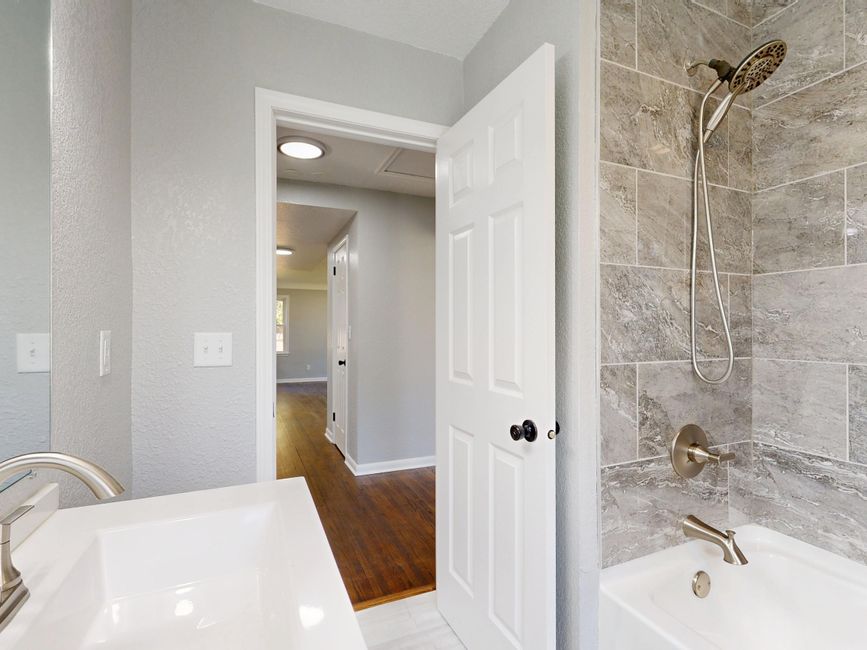
Two panes of shower glass that look identical on install day can look nothing alike after a year, because the water that dries on them is not the water in a sample jar. The cleaning intervals riverside bath remodeling tolland inn uses are shorter than most manuals say, since Riverside, CA draws water that carries a lot of dissolved calcium, and every bath remodeling job has to account for it.
What the white film actually is

When a droplet dries on glass, the water leaves and the minerals stay behind. Calcium carbonate shows as a white haze, and it builds a layer with every shower. Warm water from the water heater evaporates faster, so the film forms fastest on the glass nearest the showerhead. The same deposits crust the faucet, clog the aerator, and cloud the grout on a tile wall.
Why it etches over time
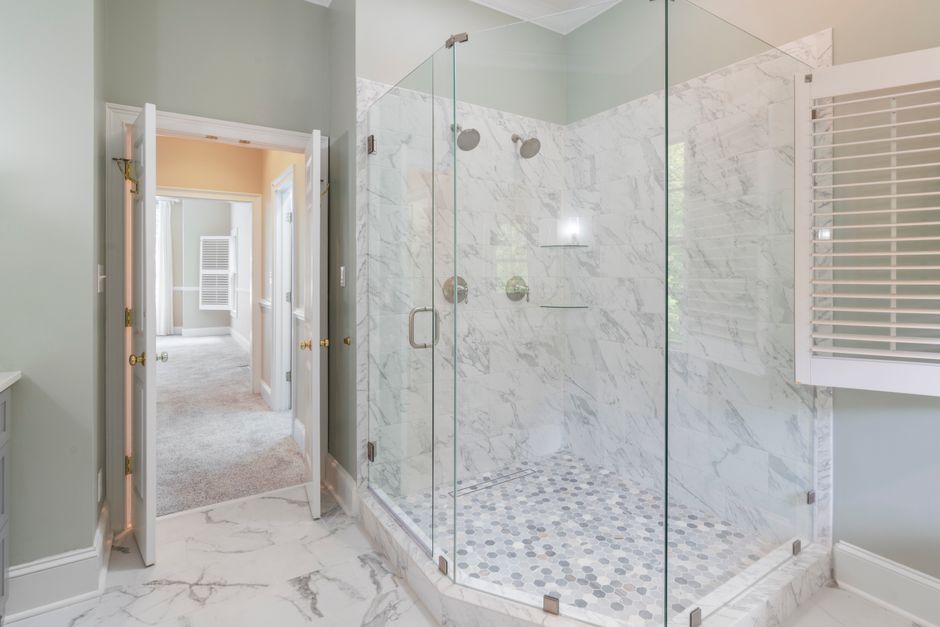
A fresh film wipes off. A film left for months bonds to the surface, and the acid in a harsh cleaner can then eat into the glass itself. Etched glass has a rough texture that holds more minerals, so the problem feeds on itself. Crews see this most often on old frameless doors in Riverside houses that have never been sealed.
Sealing the glass before it clouds
A protective coating makes the surface shed water in beads and sheets instead of clinging. It goes on a clean, dry pane, and it wears off over time, so it is reapplied on a schedule. Applied on new glass, it keeps the deposits from bonding in the first place. Applied on old glass, it only works after the film is polished off.
The squeegee habit
Thirty seconds with a squeegee after each shower removes the water before it dries. That one habit outperforms any cleaner. A small hook on the wall keeps the squeegee within reach, and the crew will often place it at install. Wipe the tile and the faucet as well, since a dry cloth stops a mineral ring from forming at the base of the spout.
Surfaces that handle hard water better
Large format porcelain tile has fewer grout lines for deposits to settle in. A dark mosaic shows haze more than a light one, which is worth knowing before the tile is picked. Epoxy grout resists staining better than cement grout. On the fixture side, a brushed finish hides spots, while polished chrome shows every droplet.
Removing deposits that are already there
Mild acid, like white vinegar, dissolves fresh calcium on a faucet in an hour. Thick crust on an aerator needs a soak. A cartridge or valve inside the wall is a different matter, since deposits can seize it, and a seized valve means the plumber opens the wall. Keeping the outside surfaces clean is the cheap part of staying ahead of hard water.